Architecture & retail
Assert continuity, clarify a space
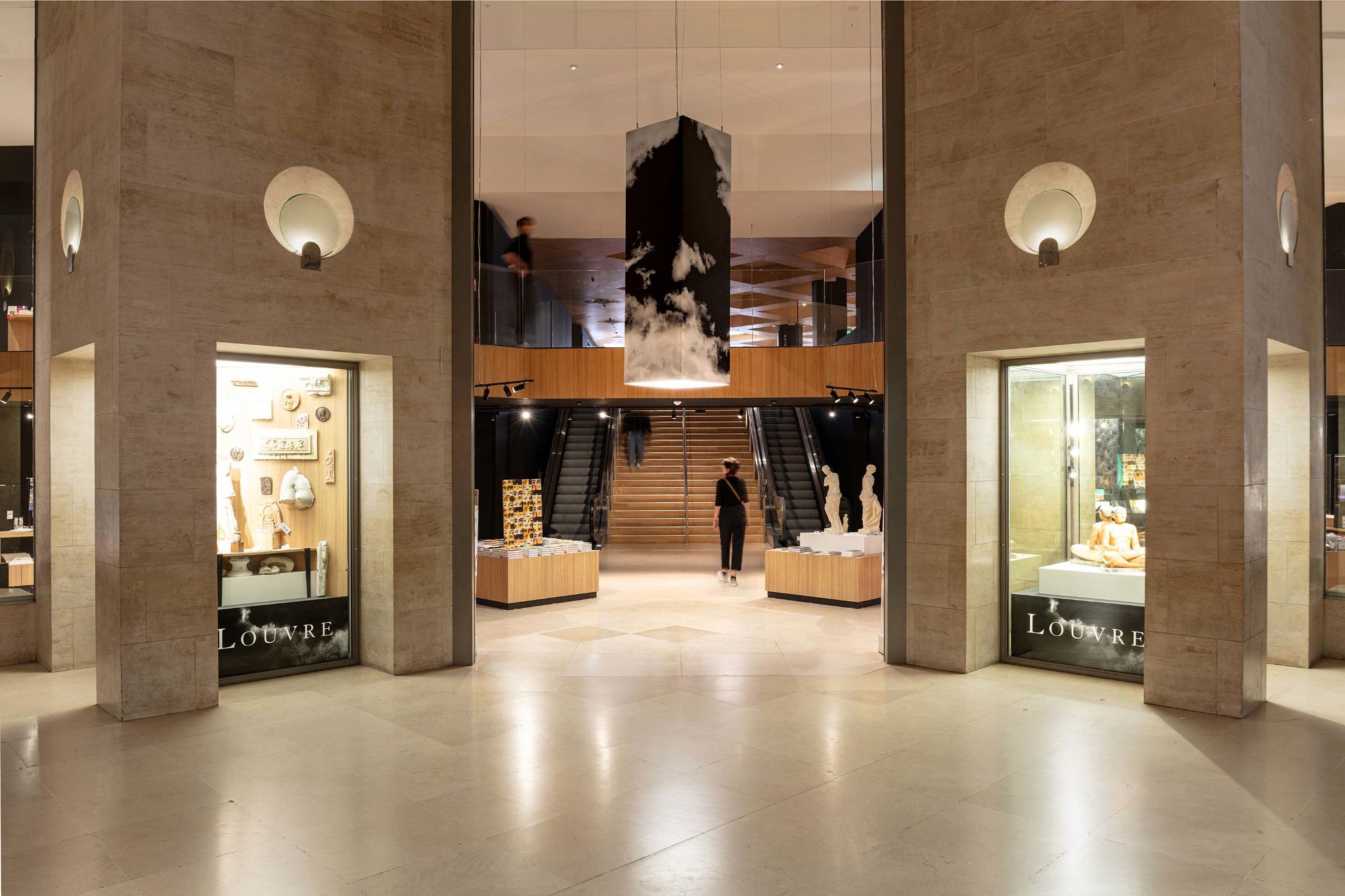
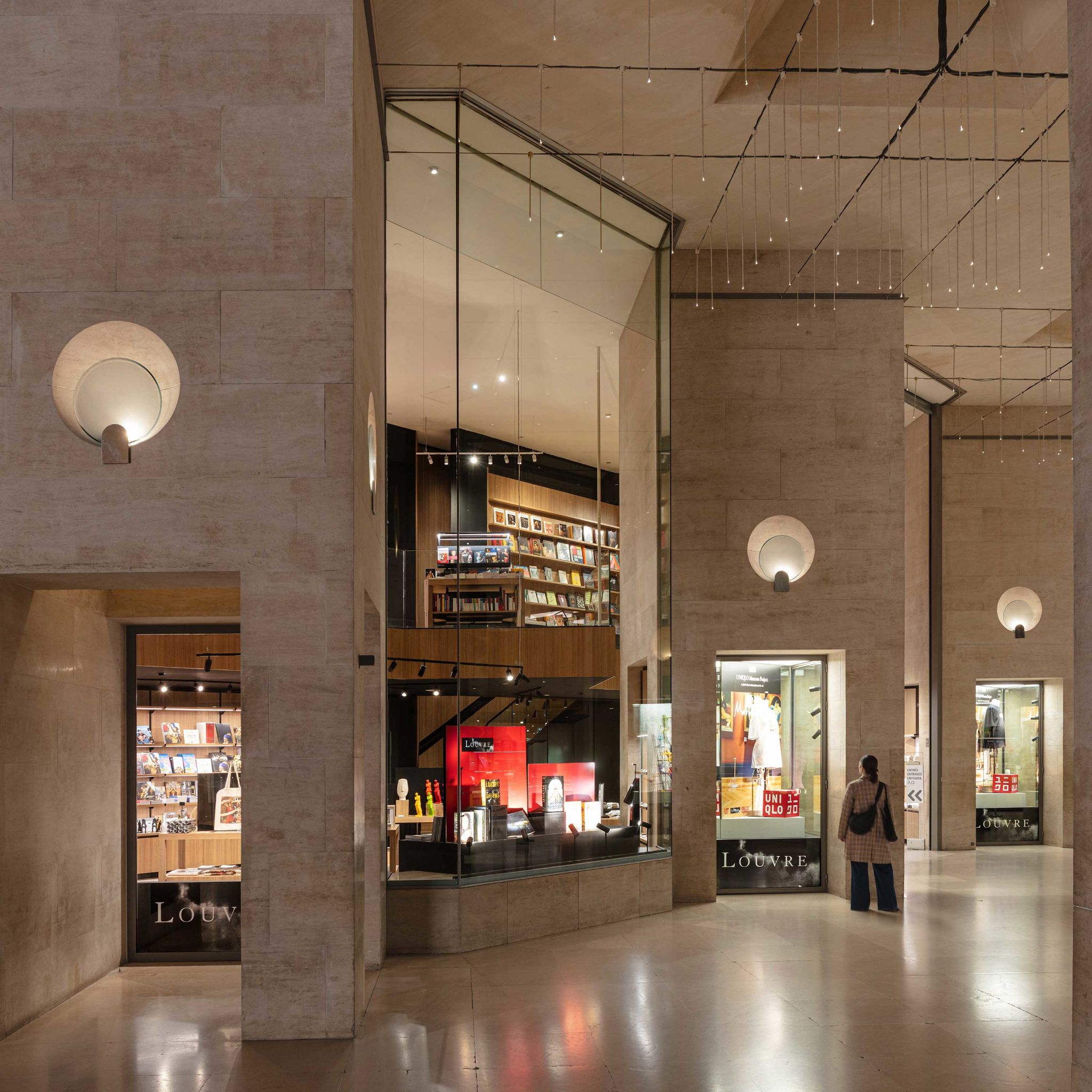
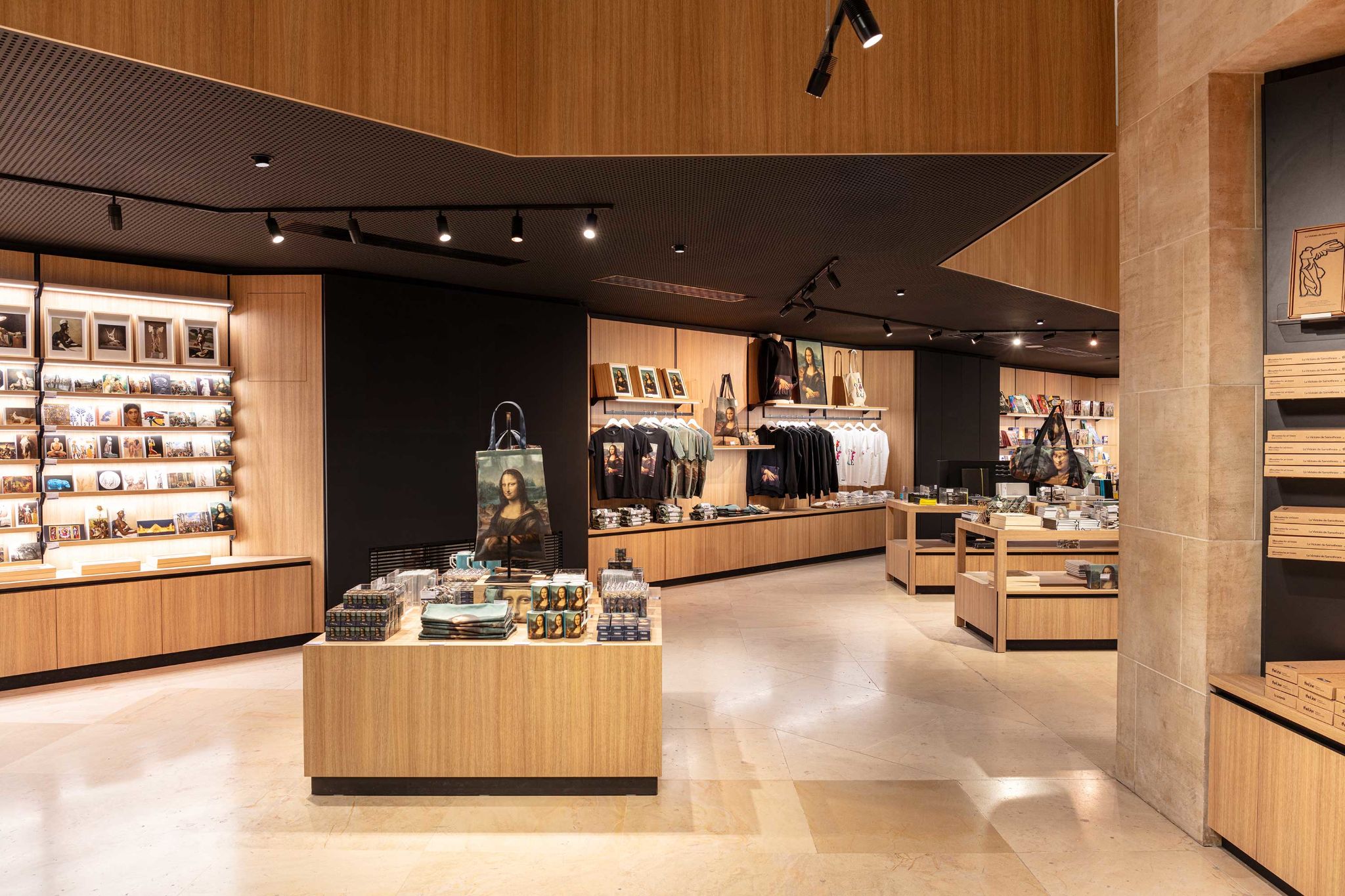
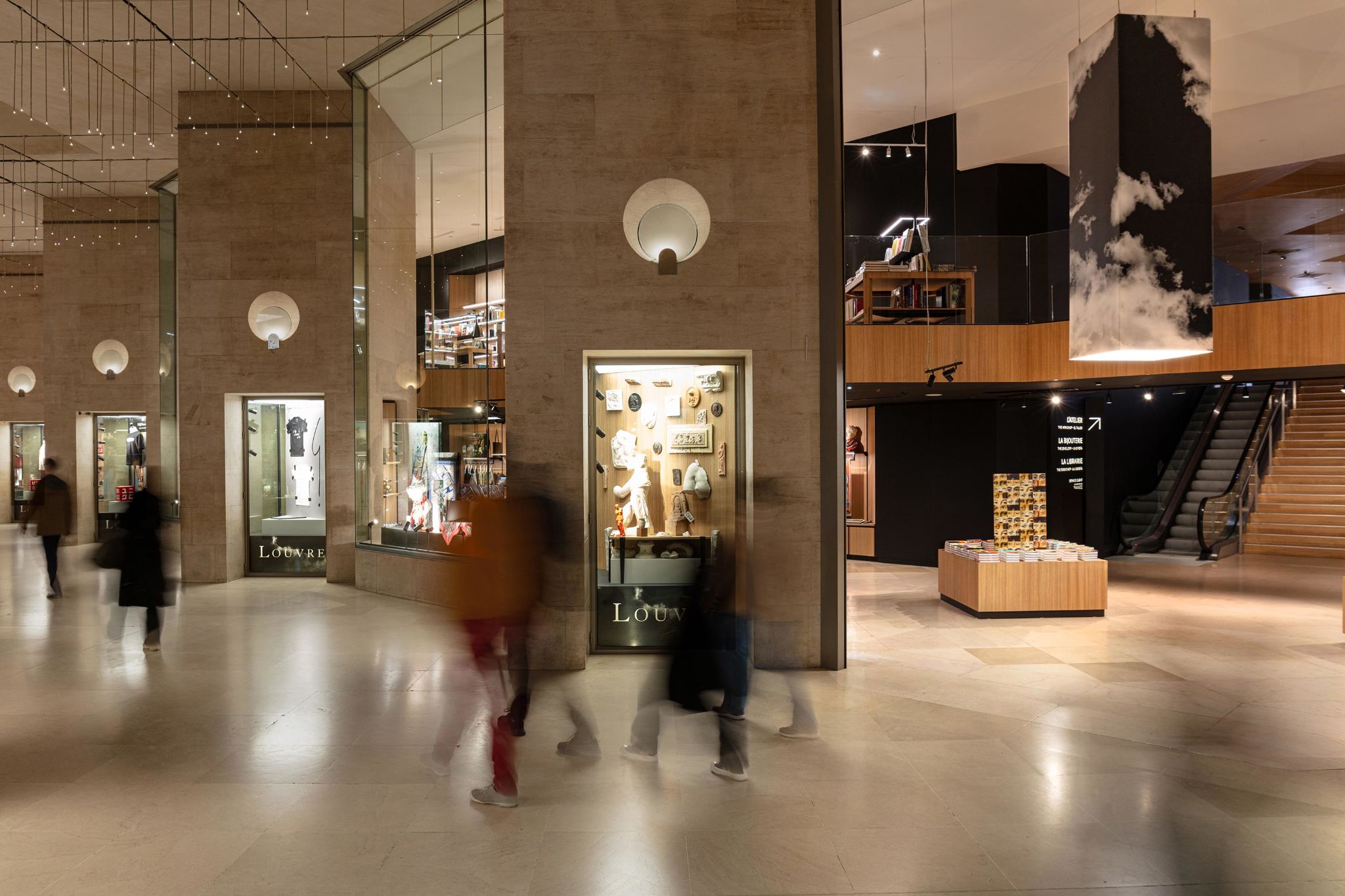
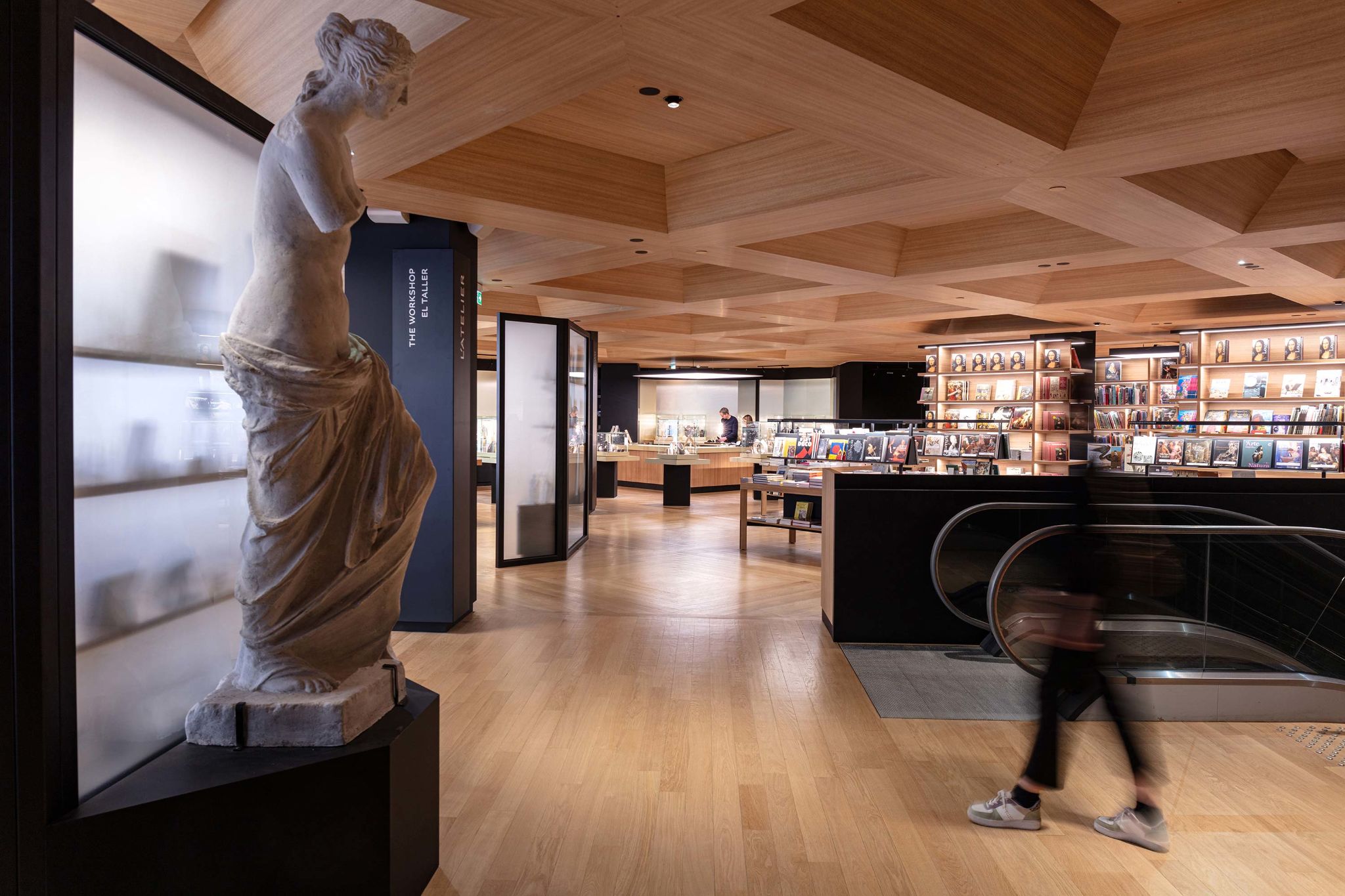
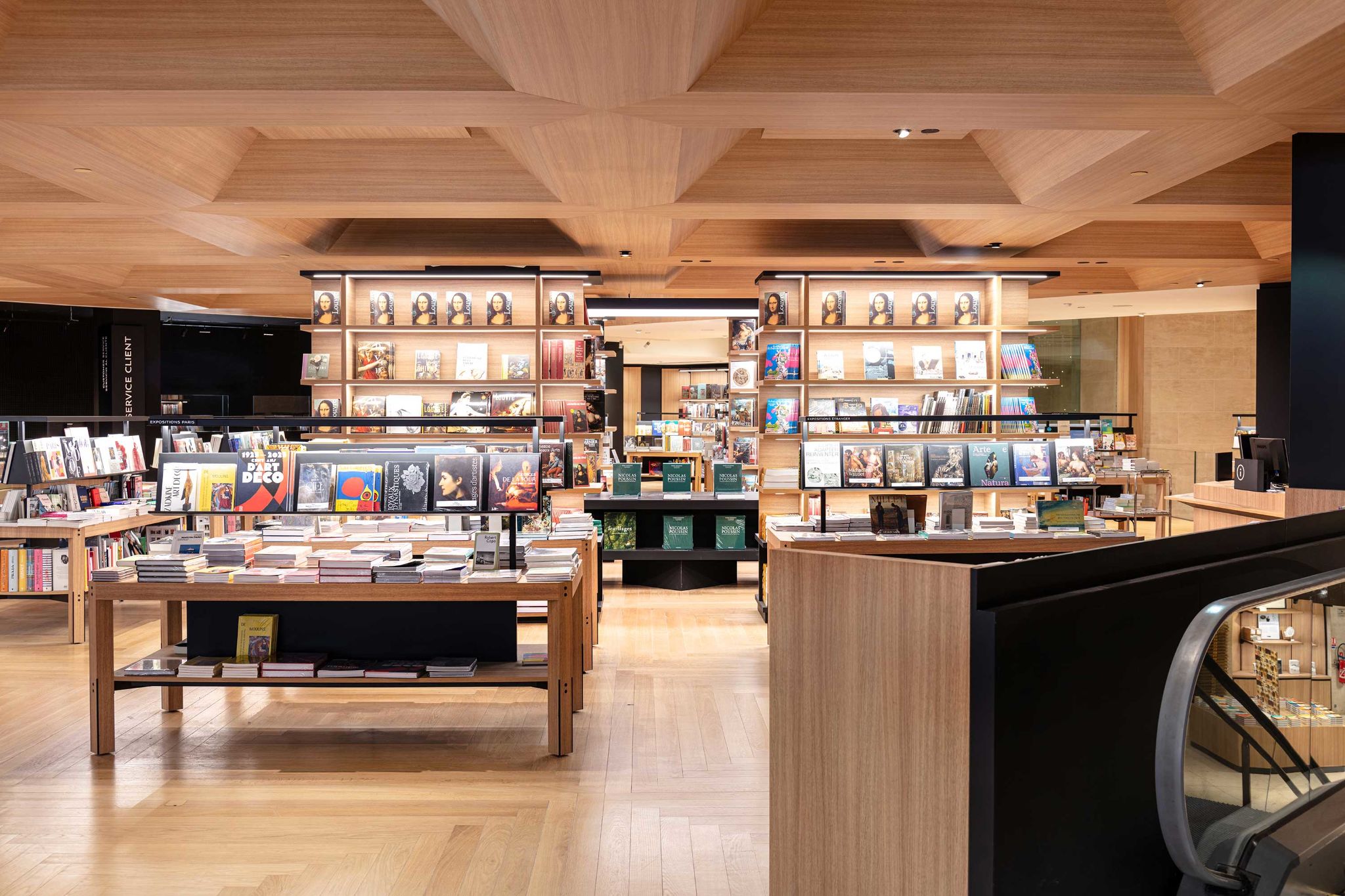
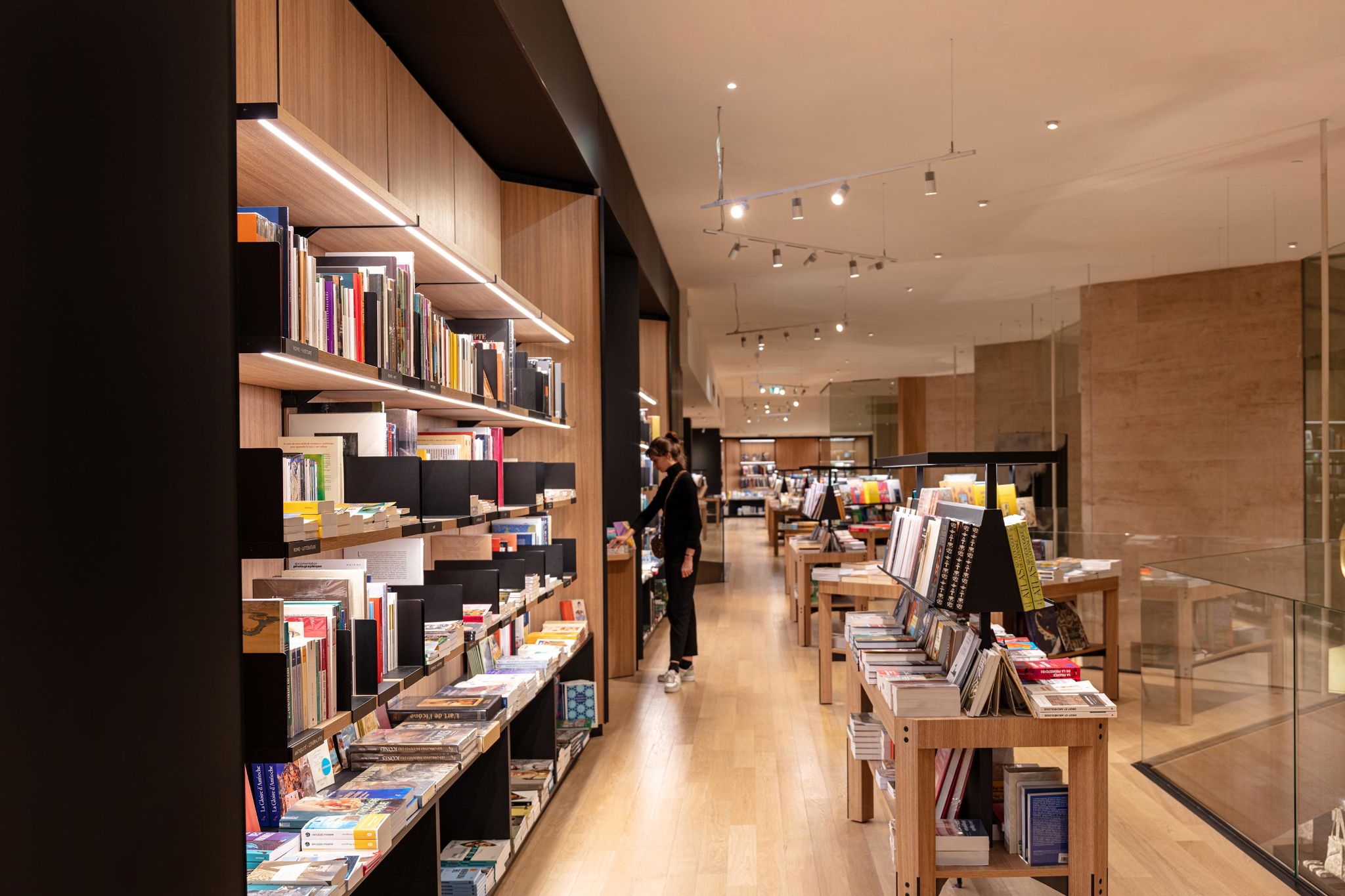
Between the Louvre and the Carrousel, the bookstore–boutique occupied an ambiguous position — a dense, fragmented space with no clear boundary between the museum and its commercial surroundings. In such a strategic location, it became necessary to take a stance: to make the bookstore–boutique fully part of the Louvre.
Developed with the Grand Palais – Réunion des Musées Nationaux, the site’s concessionaire, the rehabilitation project extends the brand, its standards, and its language.
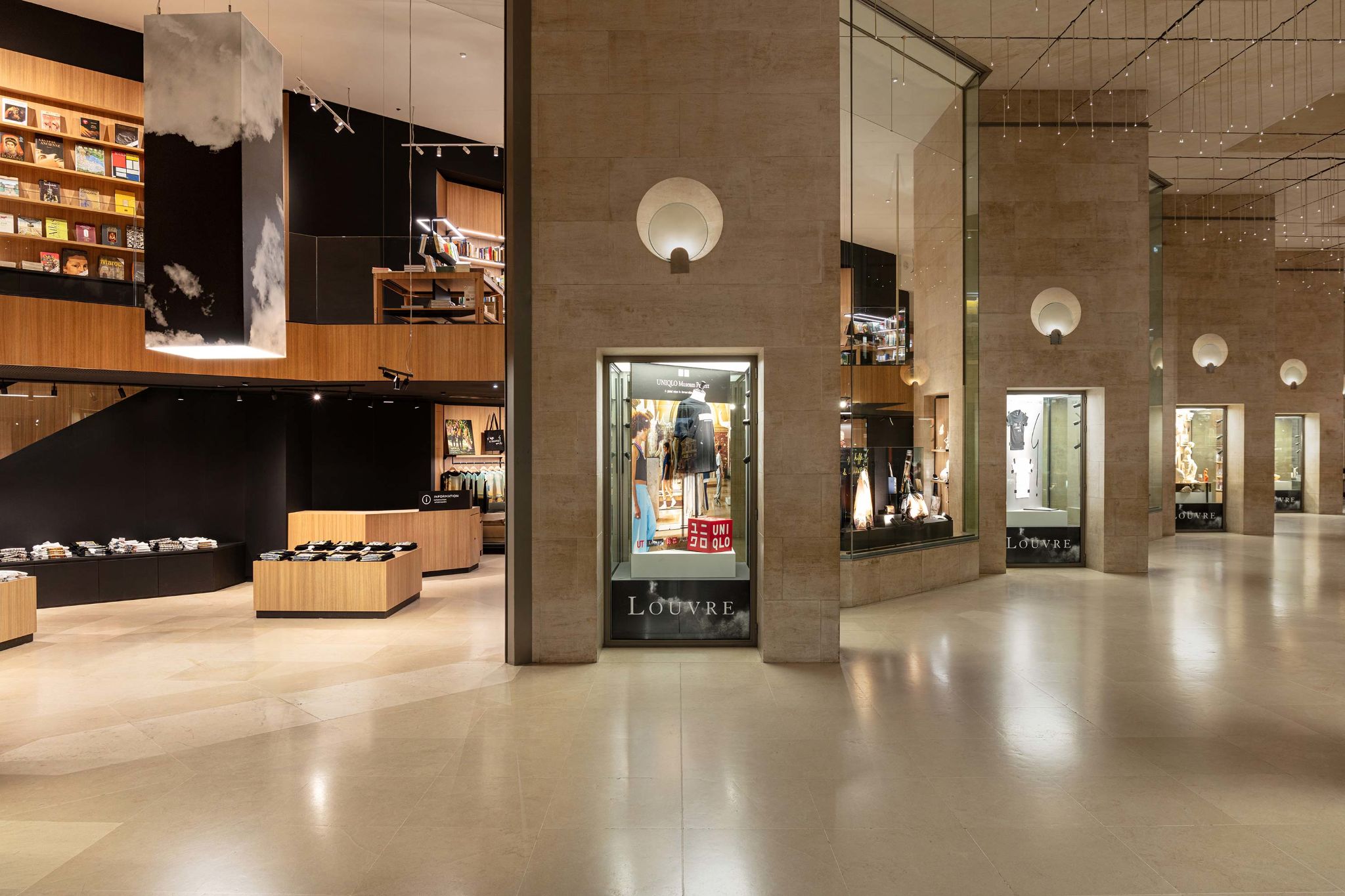
Black becomes the main vector. The bookstore–boutique becomes the museum’s final room.
Removing before adding
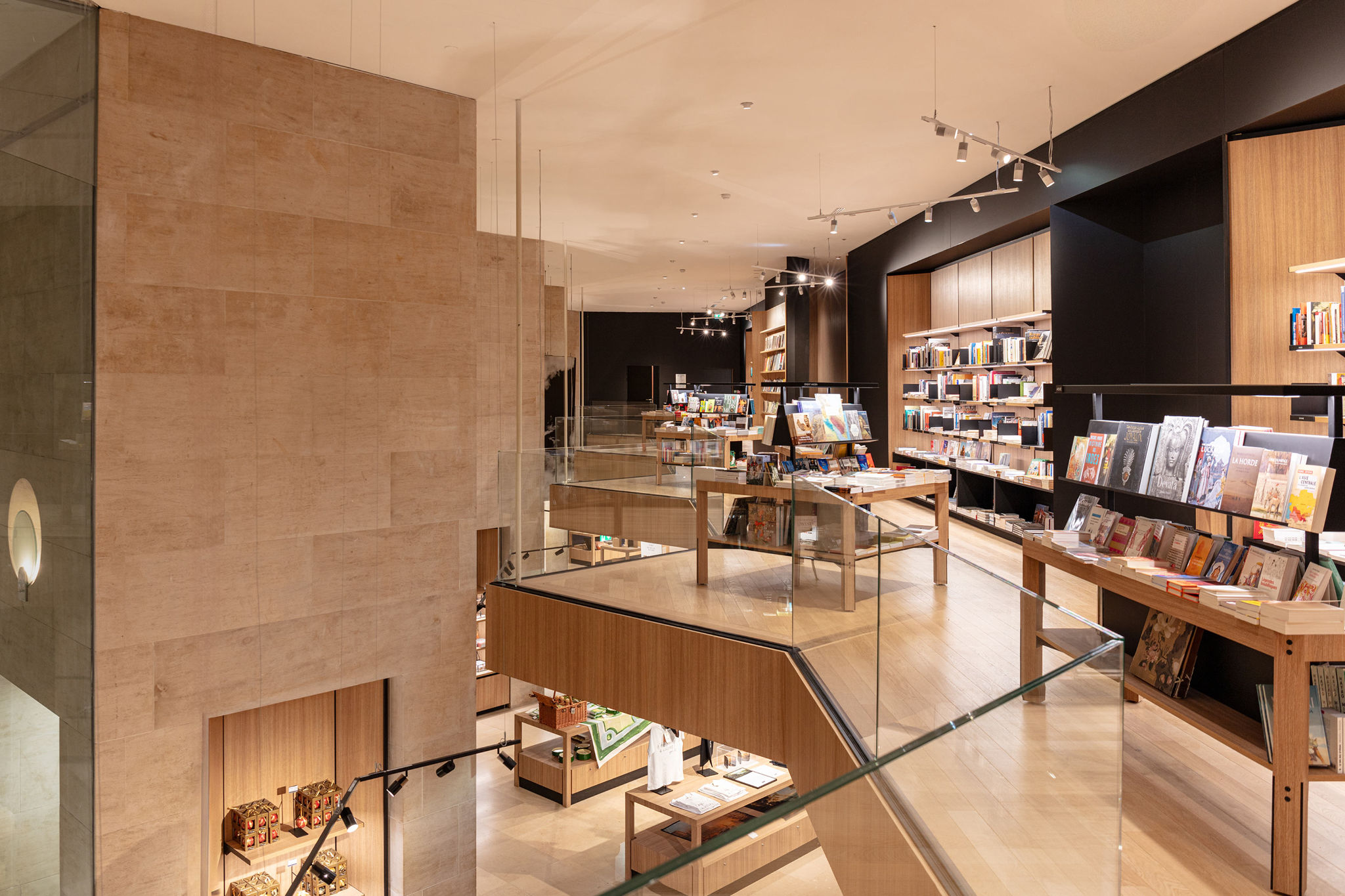
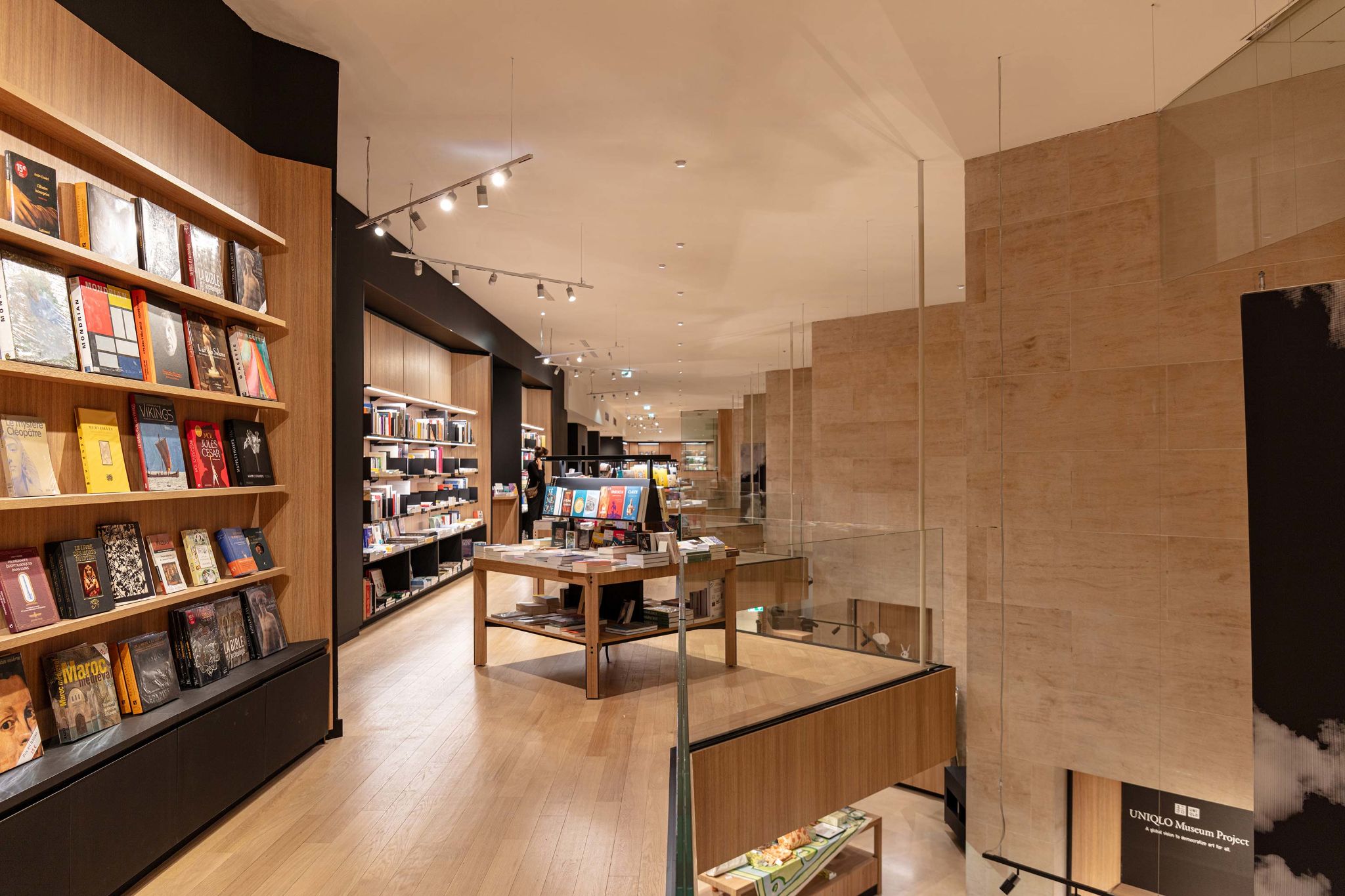
The project begins with a direct action: removing. The existing protrusions, which cluttered the space both visually and physically, are eliminated. The opaque guardrails, which concealed the upper level, are replaced with transparent elements. The walkway is tightened to open up perspectives and restore the presence of the volume.
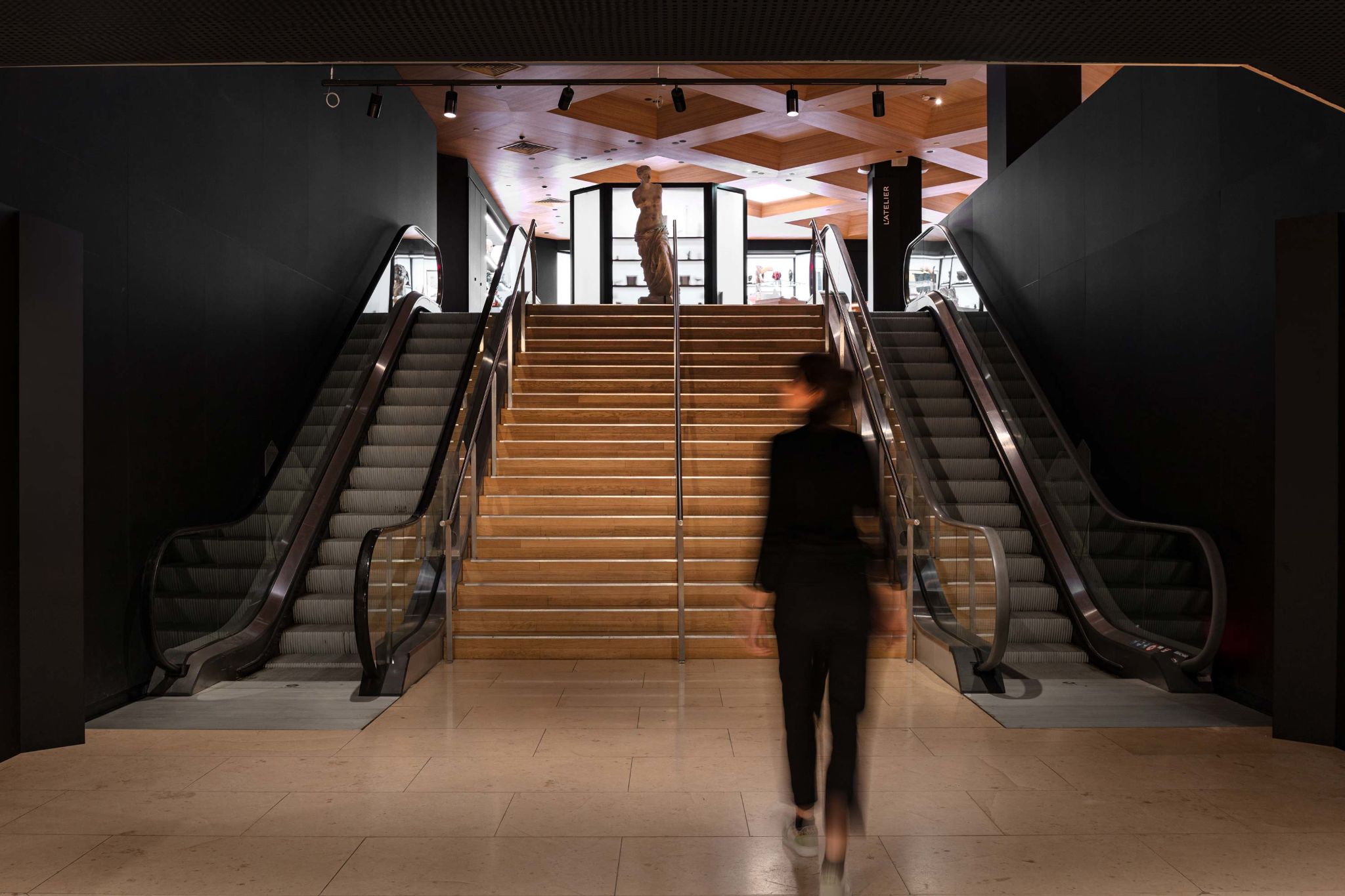
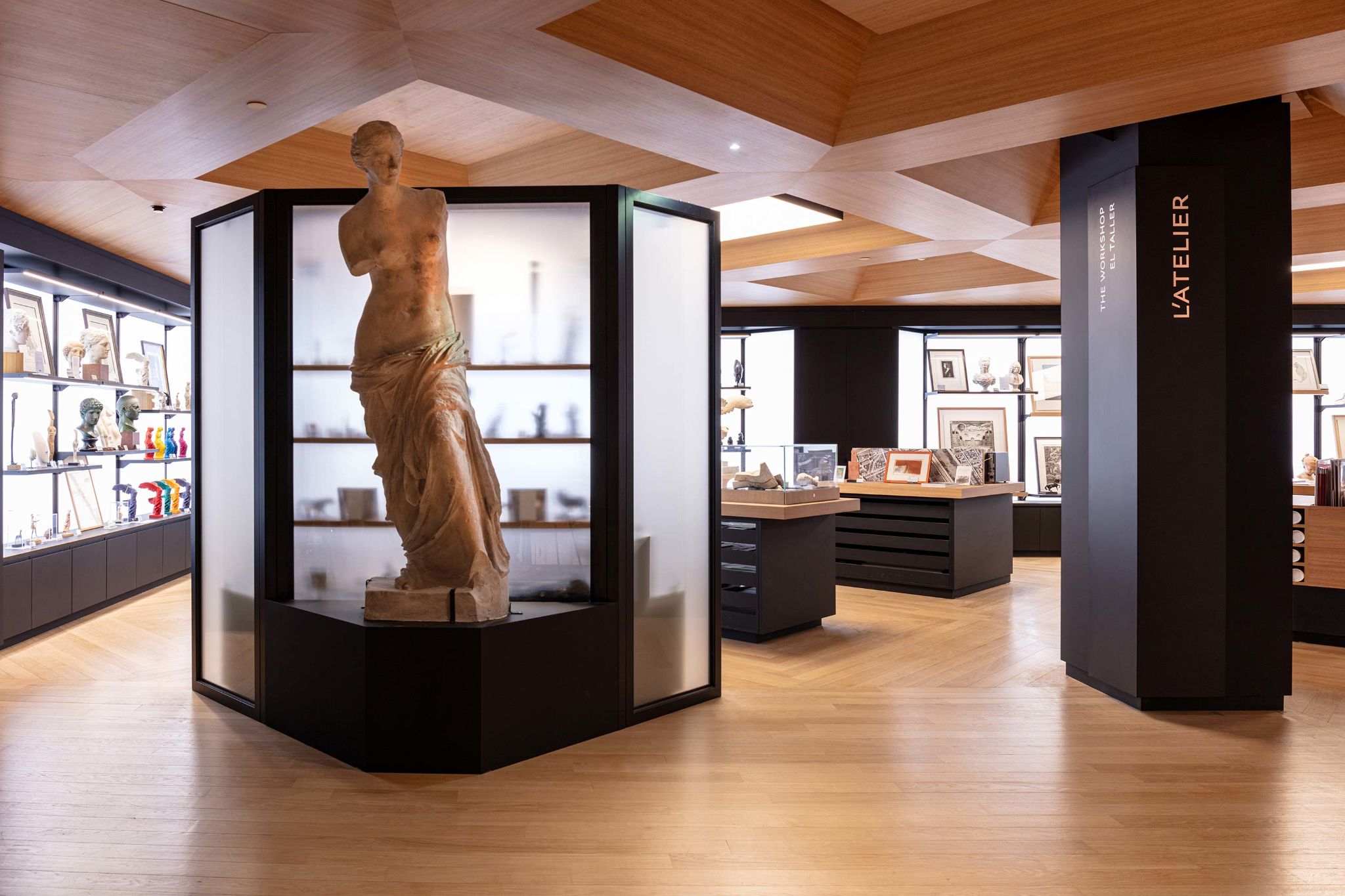
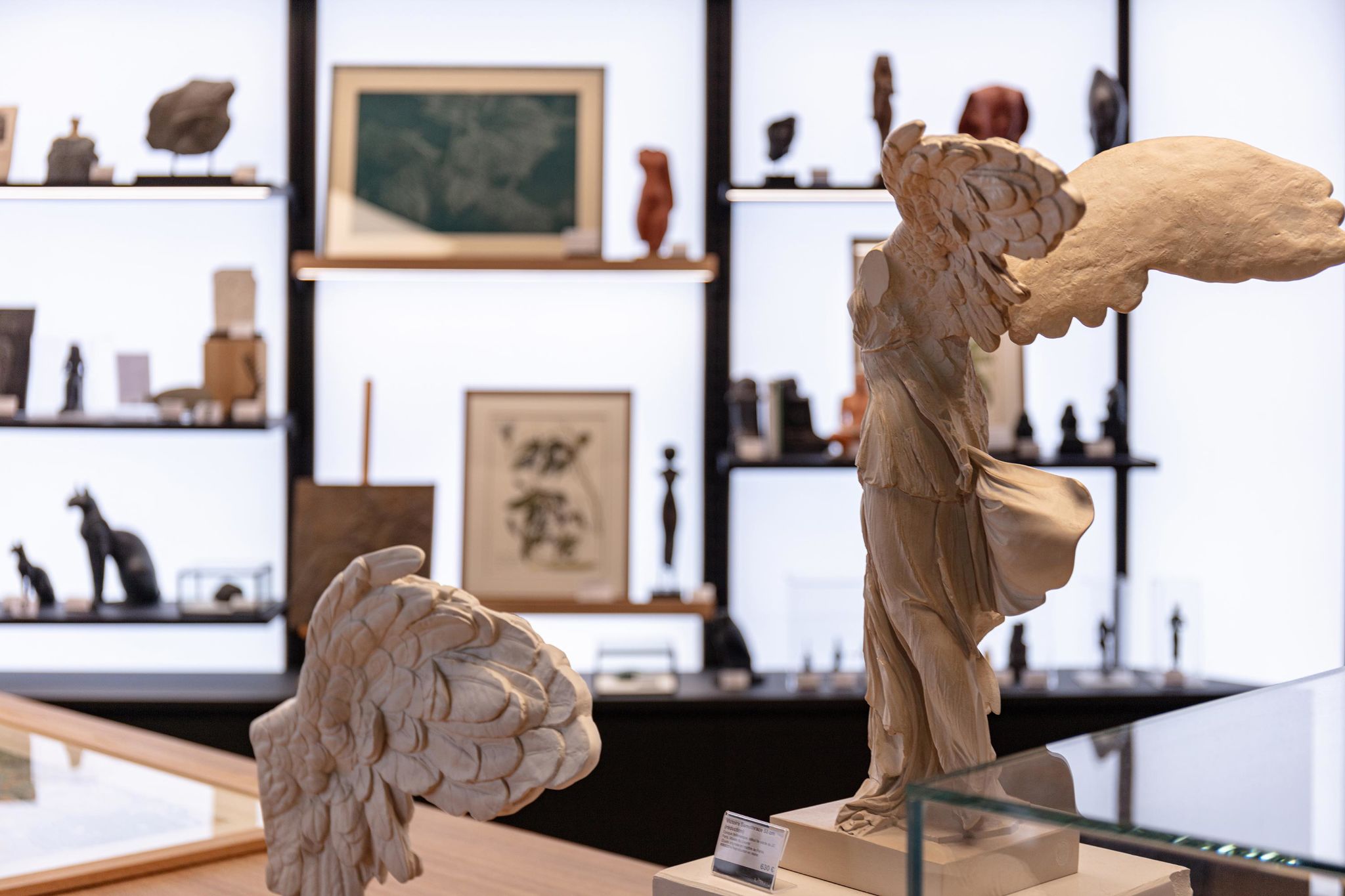
This subtractive approach restores clarity, opens views, and reveals the different levels. The upper level becomes visible and attractive again — a destination in its own right, integrated into the visitor journey, housing the casts, the chalcography offer, and the bookstore.
A framing structure as a parenthesis
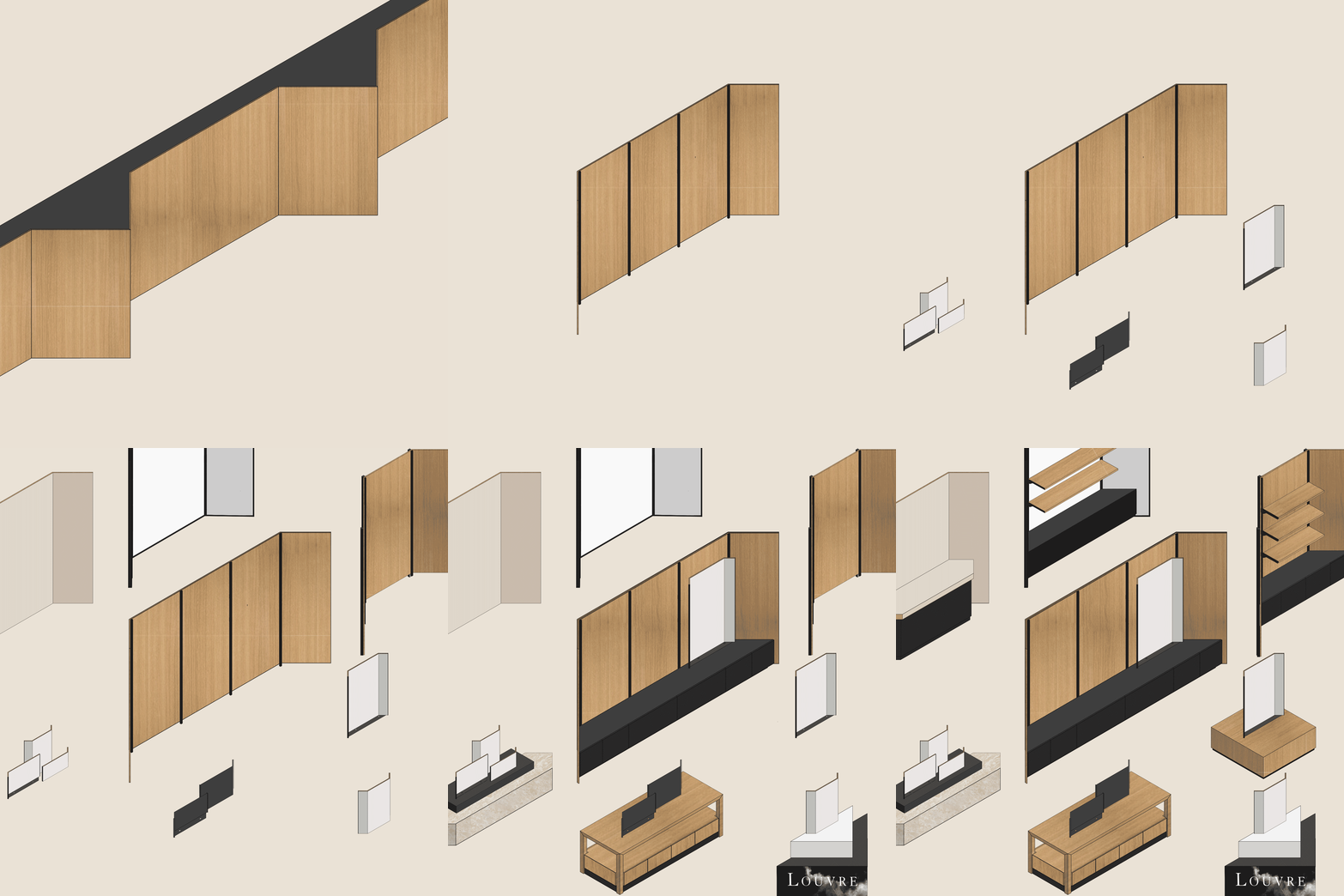
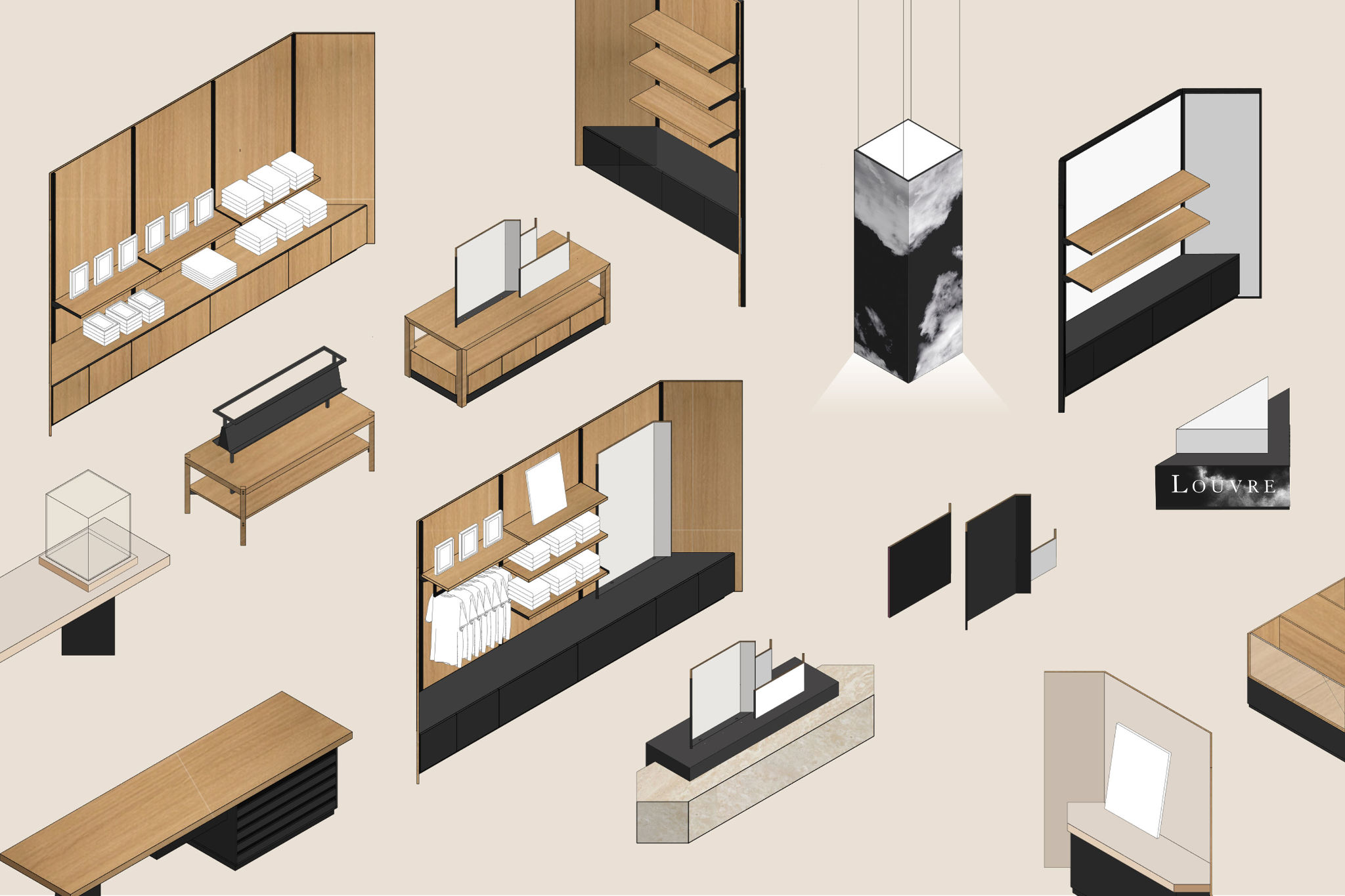
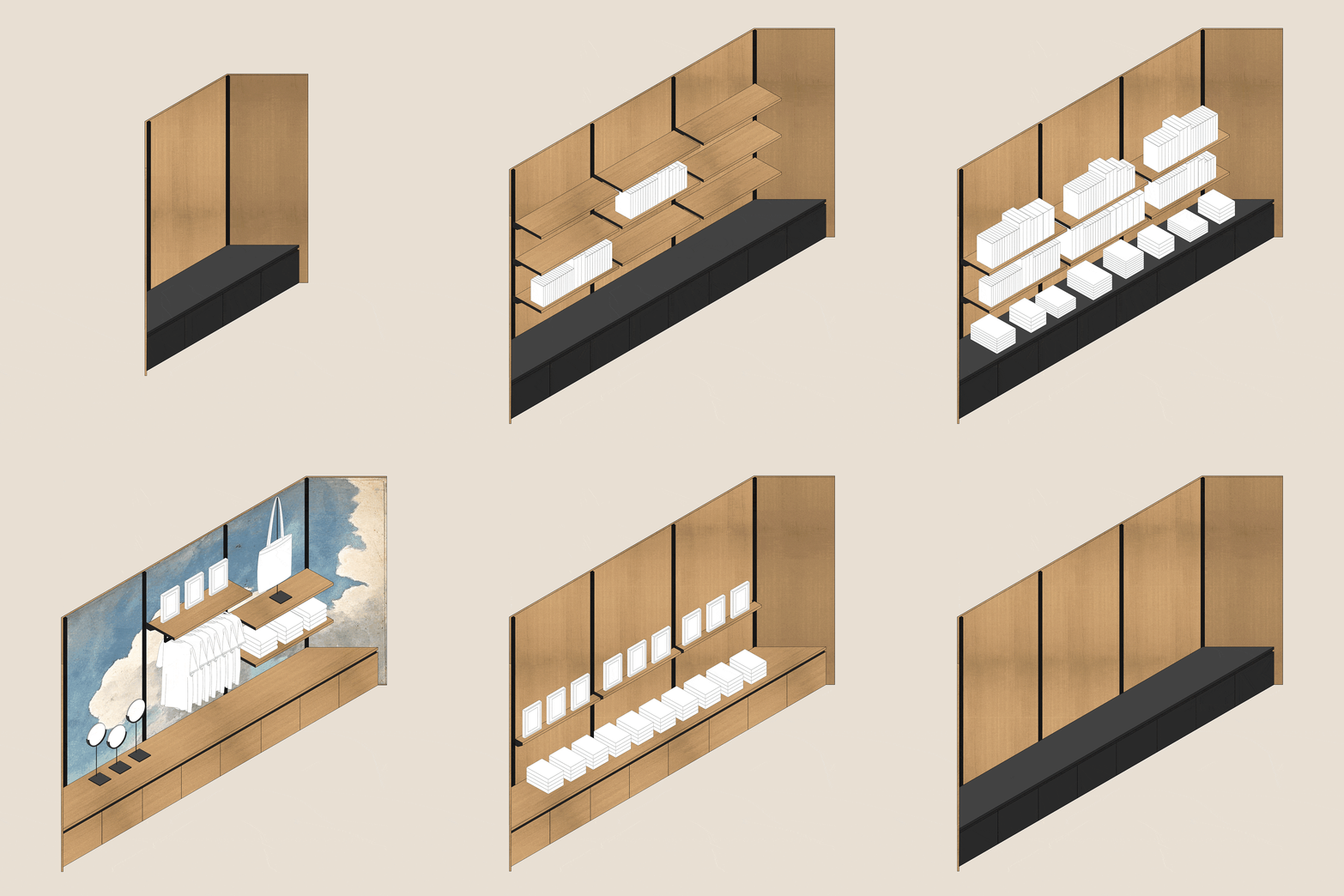
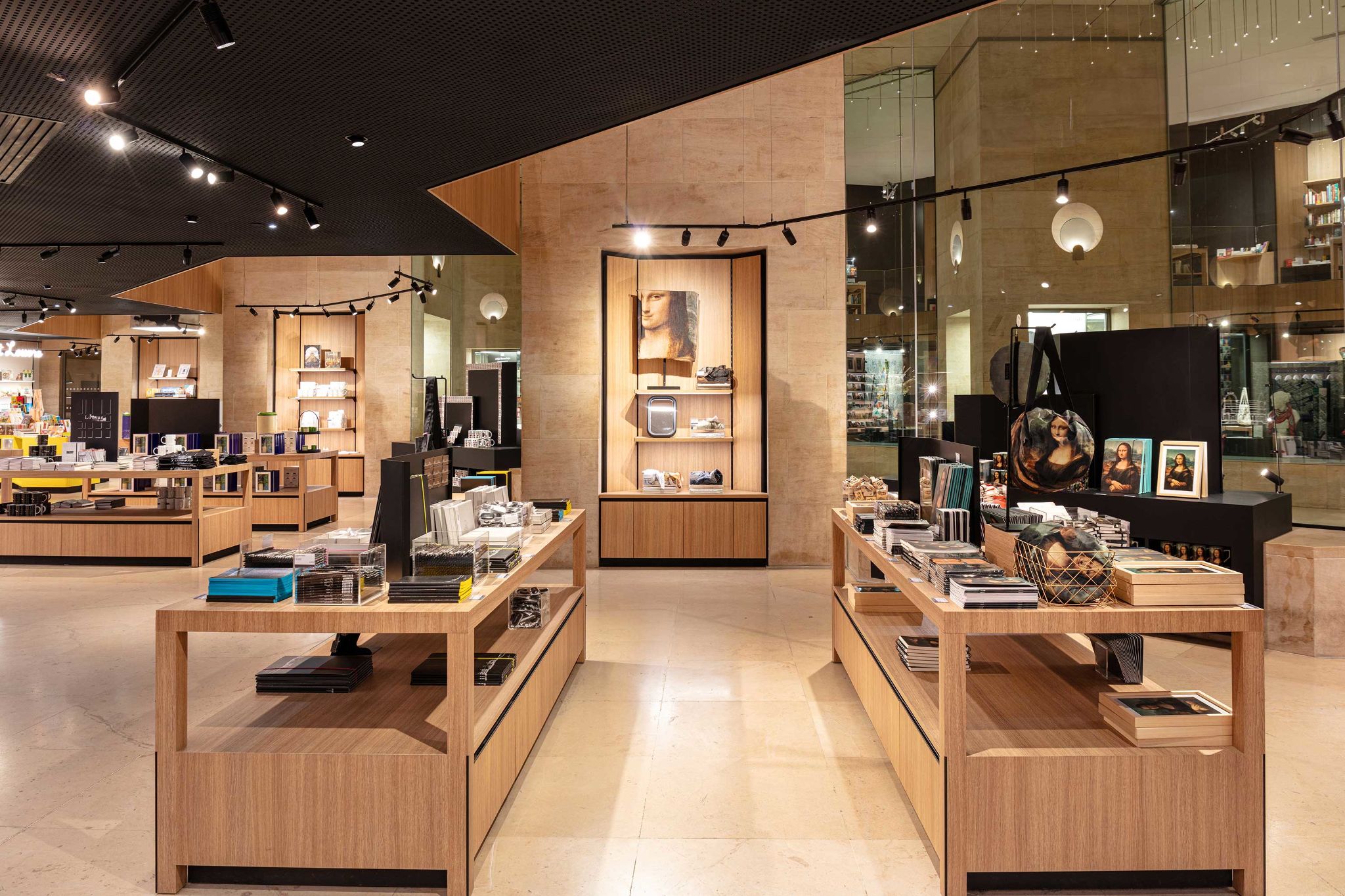
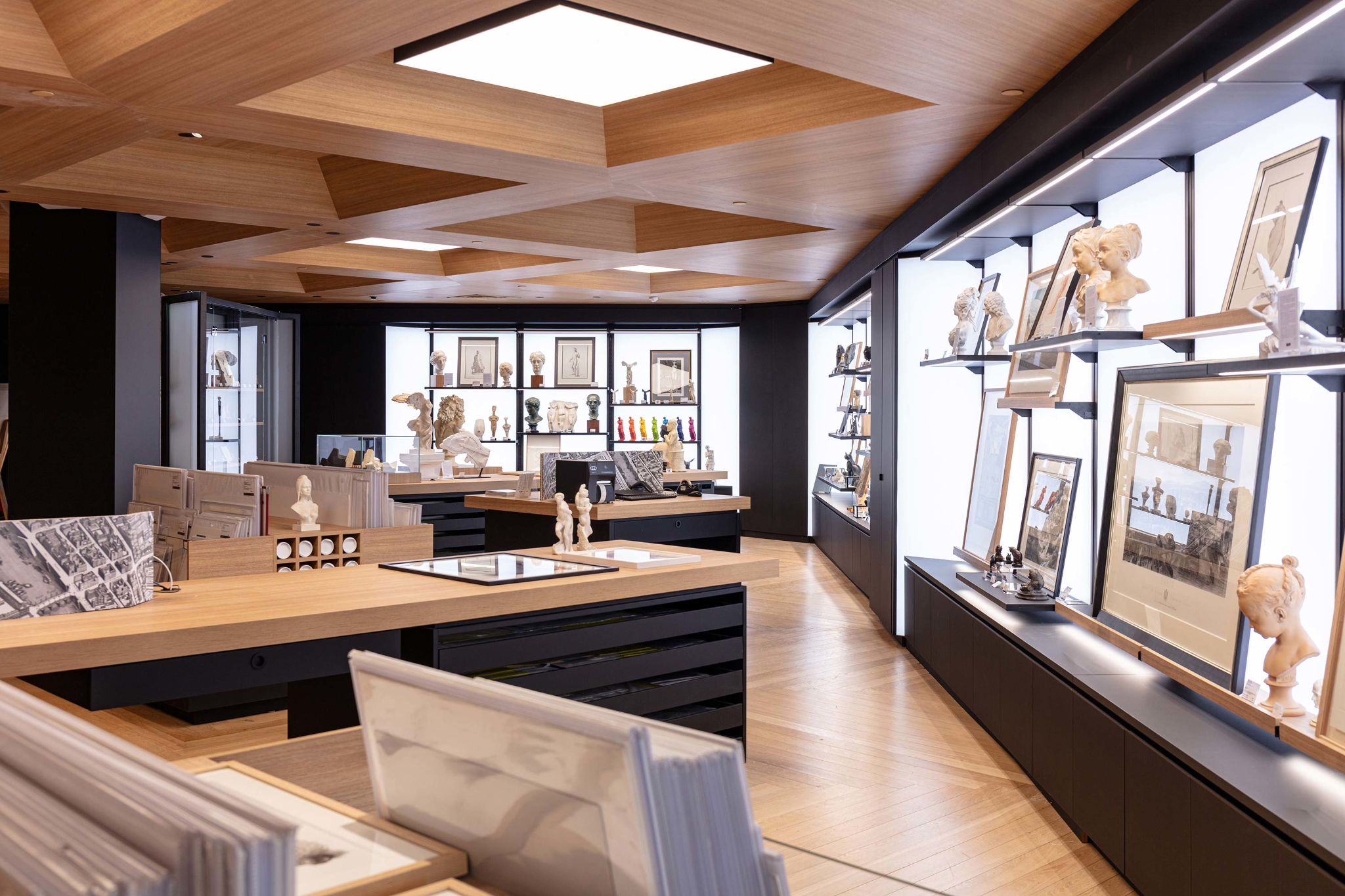
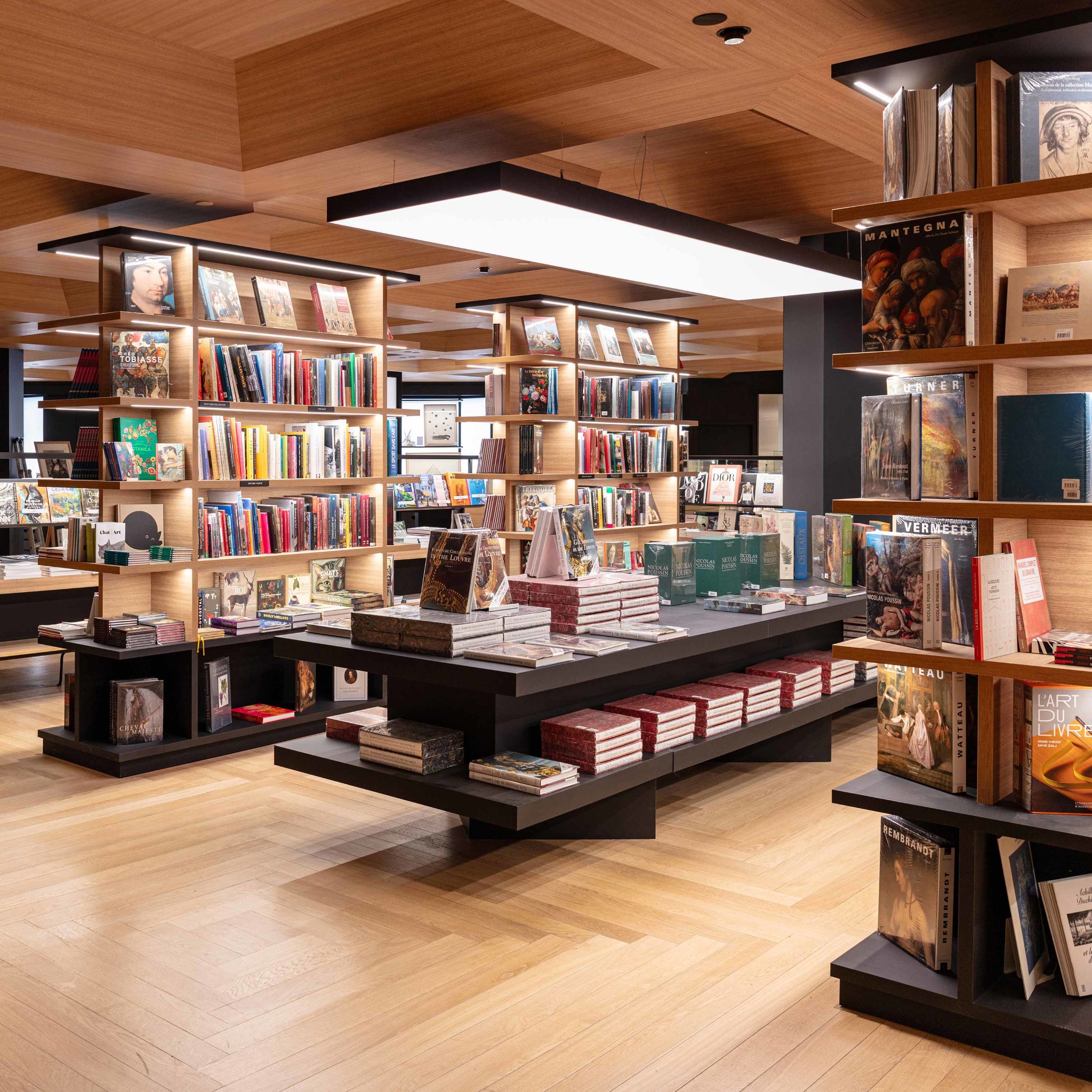
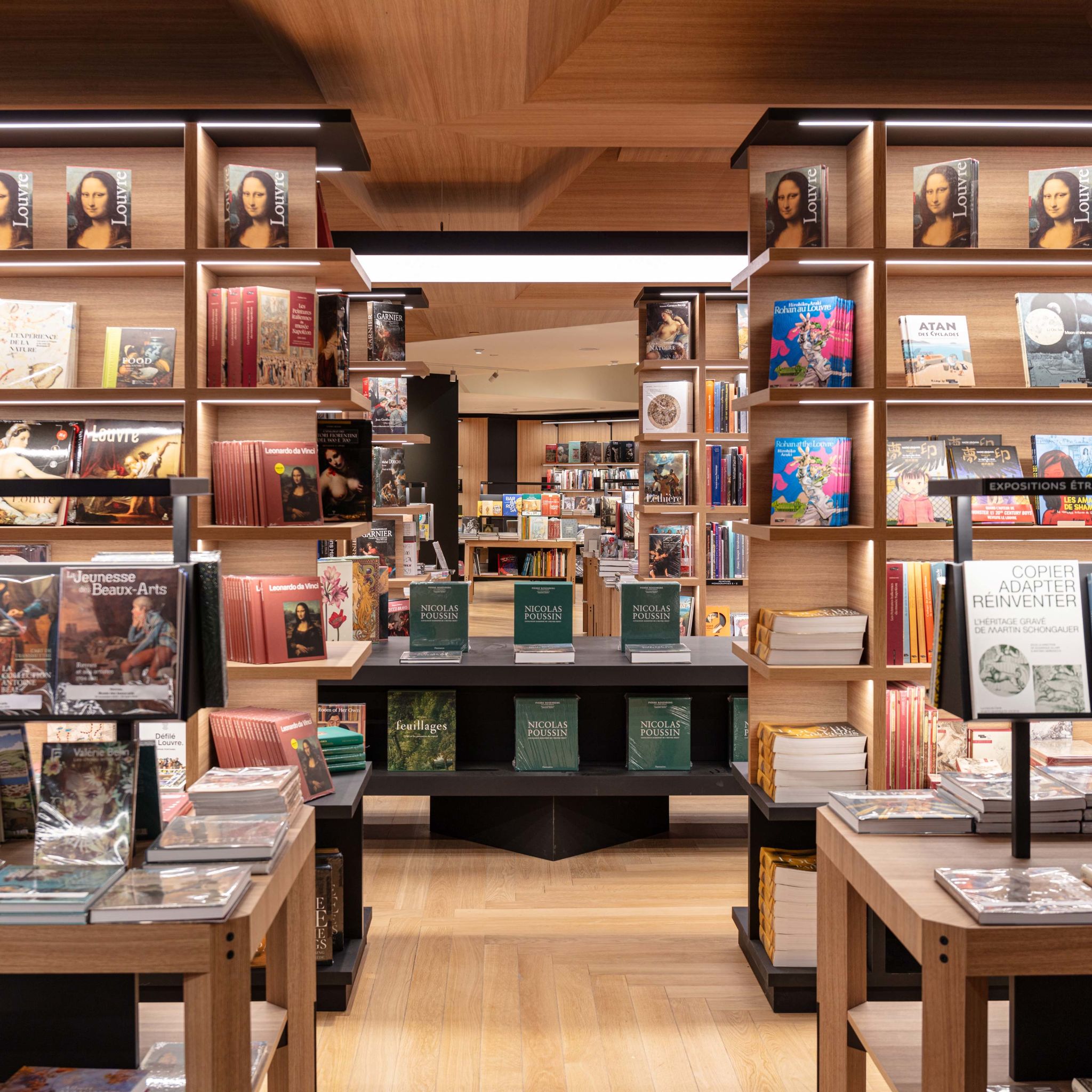
From this simplification emerges a single element: a framing “parenthesis.” Deployed across the full height, it becomes a true architectural backdrop — a wall support capable of hosting different contents and evolving over time, notably through the use of honeycomb cardboard panels instead of adhesive materials.
This system is applied at multiple scales: window backdrops, supports above tables, and furniture elements. It organizes the space, structures the pathways, and highlights the content. It echoes both the Louvre’s architecture and the idea of the frame.
Aligning with Ieoh Ming Pei’s architecture
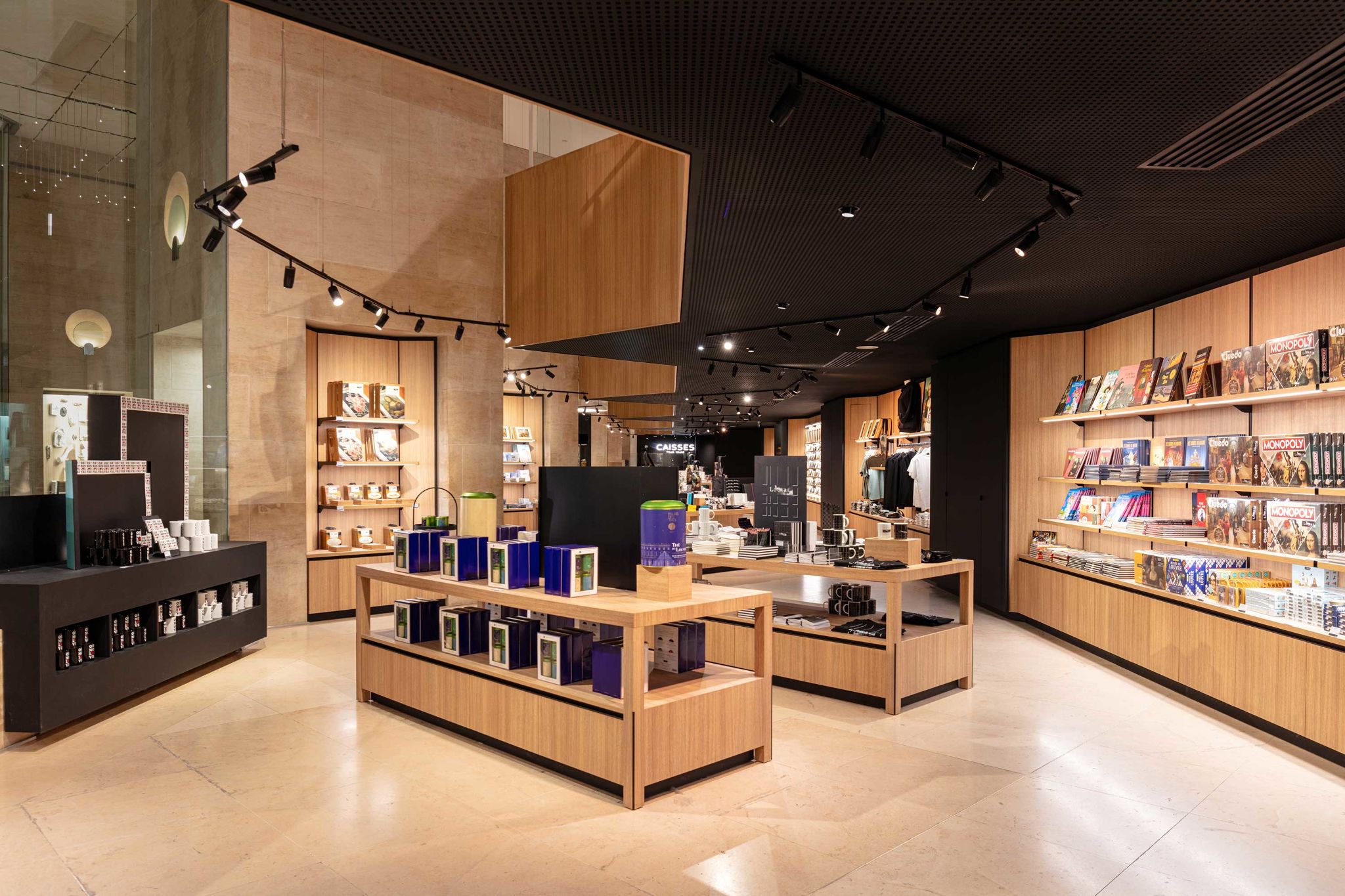
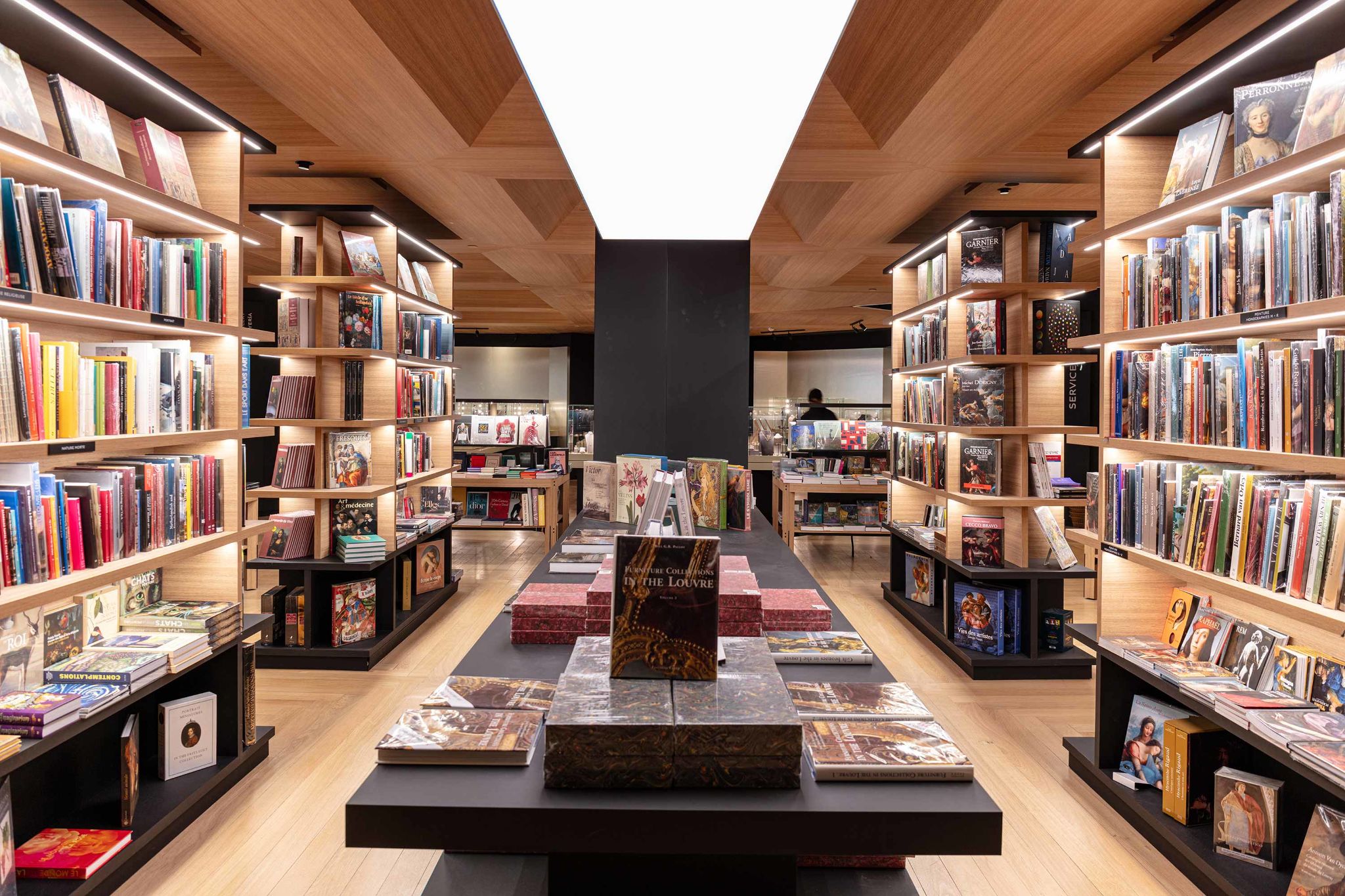
The project is rebuilt from the site itself. Spaces are reorganized in direct relation to Pei’s original architecture. Existing lines of force are rediscovered and extended. The furniture follows this logic, deployed diagonally to reinforce perspectives.
The whole becomes coherent again because it realigns with its architecture.
Black as both tool and signature
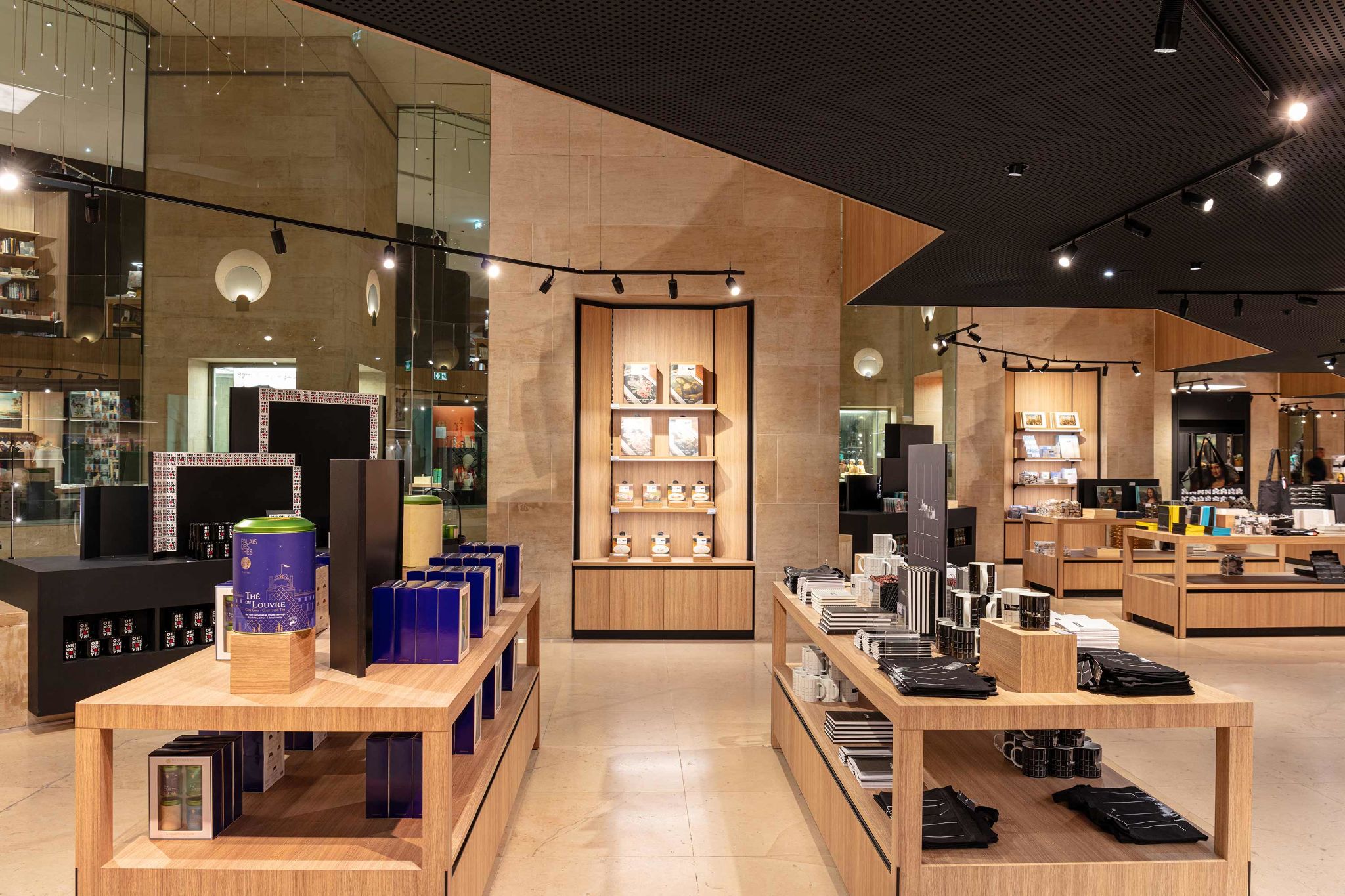
Black is central to the project. Applied to all neutral elements, it acts in negative — creating distance in order to better “illuminate” the contents. The offer gains clarity and value.
But black is also a marker. It asserts presence, creates unity, and reinforces the Louvre’s identity in a space that previously lacked it. Both background and structure, it reveals as much as it frames.
Making something new from what is already there
The project builds on the existing. Reused furniture, restored wood, transformed lighting: every retained element is reactivated. Existing light fixtures are re-lamped, then reinstalled or adapted into mobile systems, extending their lifespan while improving performance.
What is added is restrained, durable, and modular.
Client: Musée du Louvre / Grand Palais – Réunion des Musées Nationaux
Project team MOE:
Studio 5•5 – Lead
Richez Associés / ACFI / Concepto / MDS / Clarity